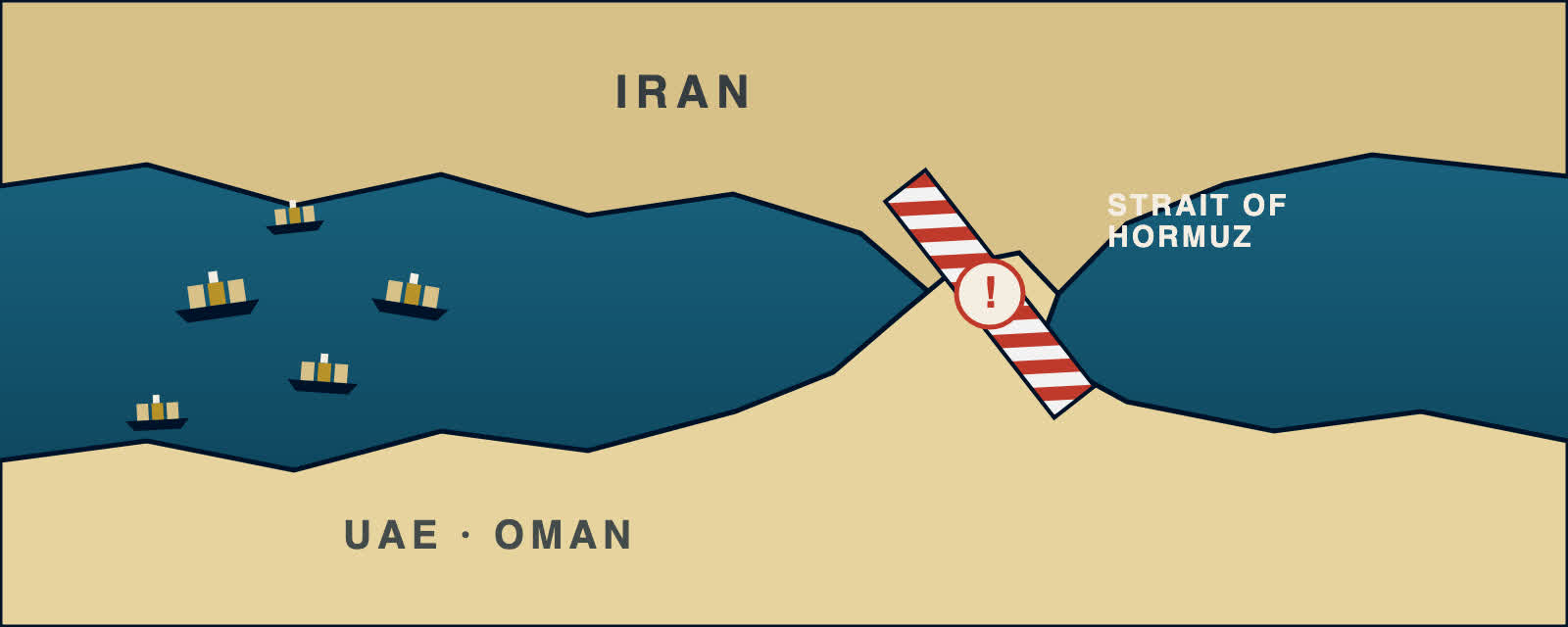
The Strait of Hormuz has been the world's most-threatened shipping chokepoint for over 40 years — and until 2026, it had never actually shut down for a sustained period. That changed this year. For South American timber exporters, the strait itself is thousands of kilometres from any loading port in Uruguay or Misiones, but the freight-market shockwaves it has triggered are already showing up in quotes on routes that have nothing to do with the Gulf.
- 28 February 2026 — Iranian forces closed the strait following US/Israeli strikes on Iran (UNCTAD).
- 5–10 vessels/day transited by late July, versus a normal 88–138 (UNCTAD).
- ~25% of world seaborne oil trade, plus major LNG and container volumes, normally pass through the strait.
- 35–55% — early-August freight-rate increase on Asia–Gulf lanes versus early July (industry rate tracking).
A Chokepoint With a Long History of Threats — and No Closures
During the "Tanker War" phase of the Iran-Iraq War (1984–1988), Iraq attacked Iranian oil tankers and terminals hoping to provoke Iran into closing the Strait of Hormuz entirely — a move that would have justified direct American intervention. Iran declined to take the bait: it limited retaliation to Iraqi shipping and kept the strait open even as both sides attacked hundreds of vessels in the Gulf (Britannica). When Iranian attacks began targeting Kuwaiti tankers, the US launched Operation Earnest Will (1987–88), reflagging Kuwaiti vessels under the American flag and escorting them through the strait — the largest naval convoy operation since World War II. Even the mining of the USS Samuel B. Roberts and the shooting down of Iran Air Flight 655 in 1988 didn't result in a full closure of the strait. In the decades since, Iran has repeatedly threatened to close Hormuz — during the 2008 nuclear standoff, the 2011–12 sanctions dispute, and the 2018–19 tanker seizures under the US "maximum pressure" campaign — without ever following through for an extended period.
2026 Is Different
Following US and Israeli strikes on Iran on 28 February 2026, Iranian forces shut the Strait of Hormuz to routine commercial traffic — this time for real. A ceasefire in April briefly reopened it, and a further US-Iran memorandum in mid-June aimed to end hostilities, but that agreement broke down in early July after attacks on commercial vessels, closing the strait again (UNCTAD; US Congressional Research Service). By late July, an estimated 5 to 10 vessels a day were transiting the strait, against a pre-crisis baseline of 88 to 138 (UNCTAD).
The Numbers Behind the Disruption
The strait normally carries close to a quarter of the world's seaborne oil trade, along with a significant share of global LNG shipments and container traffic (UNCTAD). With transit volumes down to roughly 5–10% of normal, freight rates, bunker fuel costs and war-risk insurance premiums have climbed well beyond the Gulf itself. Shipping-industry rate tracking put early-August all-in rates on Asia–Gulf lanes 35–55% above early-July levels, with transpacific container rates up an estimated 40% over pre-crisis pricing (industry freight-rate reporting, August 2026).
Why It Matters for South American Timber Exporters
Trading Globe's own routes to Saudi Arabia (Dammam, Jeddah) and Egypt (Alexandria) run through or near the affected lanes, so Gulf-bound cargo is directly exposed to the war-risk surcharges carriers have added since the crisis escalated. But the effect isn't confined to Middle East-bound shipments: capacity diverted away from Gulf routes, combined with higher insurance and fuel costs, is tightening freight markets more broadly — compounding cost increases exporters were already absorbing from the earlier Red Sea shipping crisis, which had pushed container costs on Asia–South America routes up an estimated 50–80% versus pre-crisis levels (ITTO TTM Report 30:13, citing Viet Nam's Trade Office in Argentina). For anyone negotiating South American timber contracts this year, freight is no longer a stable line item — locking in shipping terms early and pricing in contingency for surcharges is now part of quoting a deal realistically.
Sources
- Encyclopaedia Britannica — Tanker War (1984–88)
- UNCTAD — Strait of Hormuz disruptions: Implications for global trade and development
- US Congressional Research Service — The Strait of Hormuz: Security Developments and Impacts on Oil, Gas, and Other Commodities
- ITTO — Tropical Timber Market Report, Volume 30 Number 13, 1st–15th July 2026